Home · Services · Appliance Leak Cleanup
Appliance Leak Cleanup in Plainfield, NJ
Quick answer
Appliance Leak Cleanup in Plainfield starts where the record points: homes here are historic era homes, postwar ranch stock, and corridor multifamily, and aging stacks under mature trees, low block sumps, and grade water into finished basements drive the call pattern. The scope for the Historic and Downtown Sections side of the service area is written from that read, in that order.
In Plainfield, appliance Leak Cleanup is read against the stock it serves: older colonial and Victorian era homes near the historic blocks, postwar ranch and cape homes across the middle sections, multifamily stock along the main corridors, and newer subdivision homes toward the northern edge. With cold winters, humid summers, and long rain seasons off the coastal plain, the local order of work is set before price, and the written scope names that order.
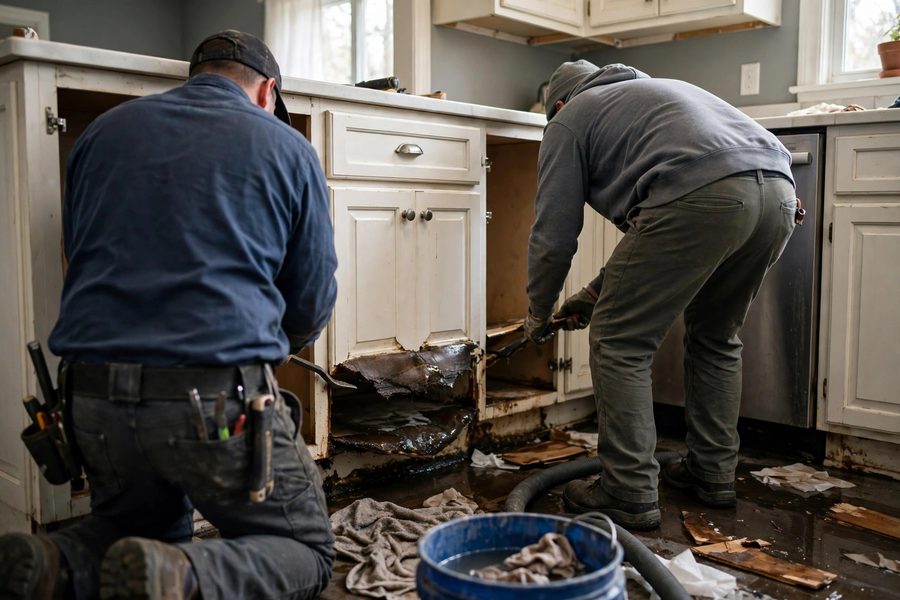
How we approach this job
Diagnosis and insurance documentation: For appliance leak cleanup in Plainfield, the buying situation is a problem with a cause: find the real source, document it with photographs and readings for any claim, and only then price the fix.
Signs you need appliance leak cleanup
- Mold or staining at the base of cabinets near an appliance. It usually means the leak has run long enough to feed growth, which puts containment into the same scope.
- Warped or lifting flooring in front of a washer, dishwasher, or fridge. It usually means a slow line has been wetting the floor assembly for weeks.
- A kitchen or laundry floor that feels soft or spongy. It usually means telling appliance water from a slab or supply question is the first diagnosis.
- Water on the floor below a second-floor laundry. It usually means the cabinet and floor materials decide how much must come out.
What the job involves
What affects the price
- How long the leak ran (slow leaks cost more to dry than fast ones)
- Flooring type and whether it can be dried in place
- Cabinet and drywall involvement
- Second-floor vs. ground-floor location
When it is an emergency
A supply line that lets go fully - washer hoses are the classic - is an emergency. Slow drips are not, but every week of drip adds subfloor damage, so same-week is the right pace.
PLACEHOLDERAppliance Leak Cleanup across the Plainfield area
Related services
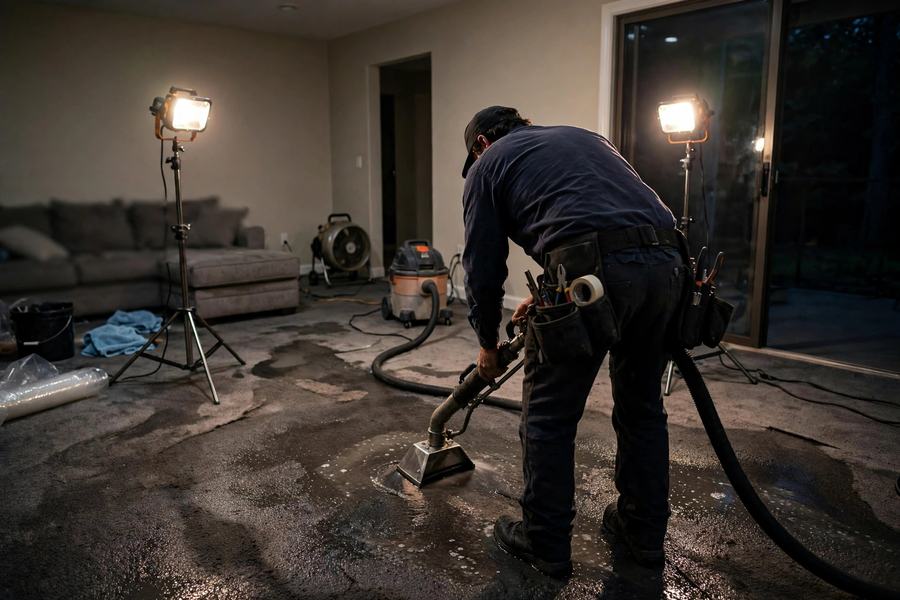
Emergency Water Removal
For Historic and Downtown Sections homes, emergency Water Removal is priced from the pattern this city keeps repeating: basement lines and older cast iron stacks fail under the mature tree blocks, sump pumps on the low blocks near the brook run through every long rain, and finished basements in the postwar sections take water from grade before anyone sees a stain. Green Brook sets the conditions, and the scope names them in writing before work starts.
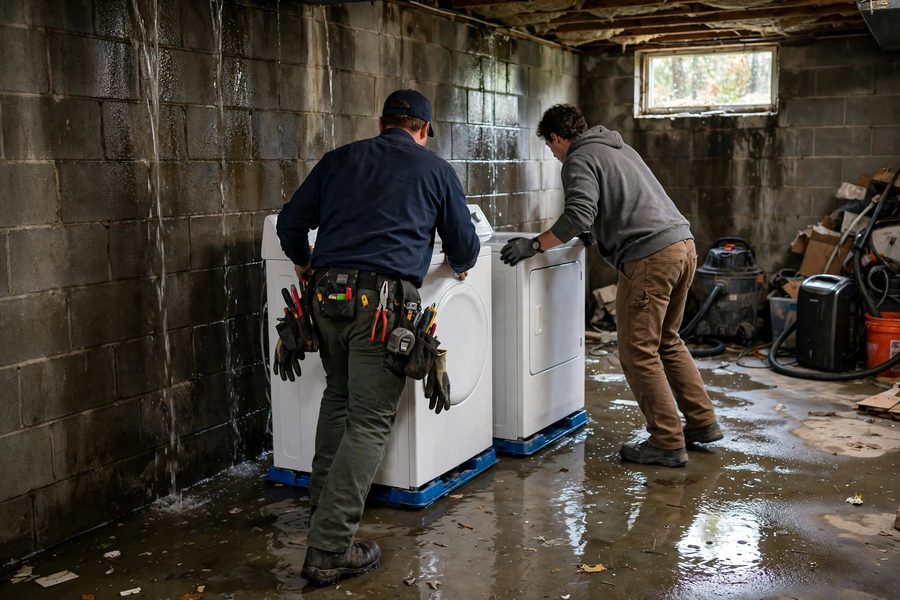
Basement Water Removal & Drying
In Plainfield, the basement Water Removal & Drying scope follows the evidence: aging stacks under mature trees, low block sumps, and grade water into finished basements drive the call pattern, and the stock it serves is historic era homes, postwar ranch stock, and corridor multifamily. Diagnosis first, then a written scope, then work: that order does not change by neighborhood.
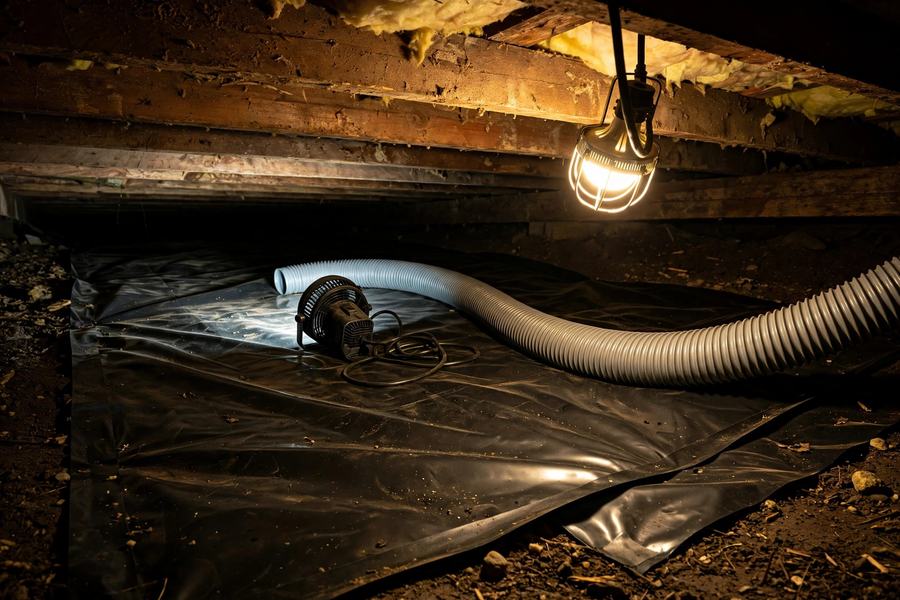
Crawl Space Water Damage
In Plainfield, crawl Space Water Damage is scoped from the documented read, not a phone guess: basement lines and older cast iron stacks fail under the mature tree blocks, sump pumps on the low blocks near the brook run through every long rain, and finished basements in the postwar sections take water from grade before anyone sees a stain. Around Northern and Corridor Sections, the written scope names the order of work for historic era homes, postwar ranch stock, and corridor multifamily before anyone commits to a price.
Water Damage Restoration
The Plainfield read on water Damage Restoration runs through the local stock first: older colonial and Victorian era homes near the historic blocks, postwar ranch and cape homes across the middle sections, multifamily stock along the main corridors, and newer subdivision homes toward the northern edge. With cold winters, humid summers, and long rain seasons off the coastal plain, the order of work is set before price, and the written scope names that order.
Appliance Leak Cleanup questions, answered
When is appliance leak cleanup an emergency?
A supply line that lets go fully - washer hoses are the classic - is an emergency. Slow drips are not, but every week of drip adds subfloor damage, so same-week is the right pace.
What affects the price of appliance leak cleanup in Plainfield?
The main price factors for appliance leak cleanup are covered in the cost section above. The contractor confirms the exact price in a written estimate after seeing the job, and nothing is owed until you approve it. The call and the referral are free.
My basement only wets when the creeks flood. Will drying fix it?
Drying fixes this event. The pattern is a drainage diagnosis: grading toward the foundation, surcharged storm drains, and sump capacity all belong in the same conversation, and repeated events should be documented with dates and photographs whether or not each one becomes a claim.
Does insurance usually cover water damage in Plainfield?
In Plainfield, the local record frames the answer: aging stacks under mature trees, low block sumps, and grade water into finished basements drive the call pattern. Coverage turns on the sudden event: the burst line, the failed pump, the storm that pushed water in. Homes here are historic era homes, postwar ranch stock, and corridor multifamily, and around Historic and Downtown Sections that stock decides how the work is sequenced. Keep the documentation together from the first visit: photographs, the itemized scope you approved, and the records the job produces in Plainfield.
How fast should drying start after water gets in?
Within 24 hours is the standard advice, and sooner is better. Drywall wicks water upward about an inch per hour at first, and mold can colonize damp drywall and dust in 24-48 hours in warm conditions. Extraction the same day changes the whole job.
Request a callback
Prefer to talk later? Leave your details and an independent local pro will call you back. No charge to you, no obligation.
Green Brook Restoration is a free referral service. Submitting this form connects you with independent local contractors who provide the work.